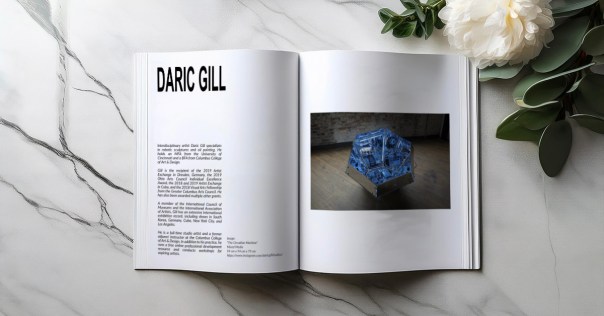
I am deeply honored to announce that “The Shy Machine” has been published in Issue 18 of Al-Tiba9 Magazine, an esteemed international platform known for showcasing experimental & innovative contemporary art. A gallery & publication based in Barcelona, Spain, Al-Tiba9 has earned a reputation for promoting diverse artistic voices worldwide, reflecting today’s art scene’s dynamic & ever-evolving nature. I would like to extend my heartfelt thanks to the Al-Tiba9 team for their commitment to providing a platform that fosters creativity & critical dialogue.
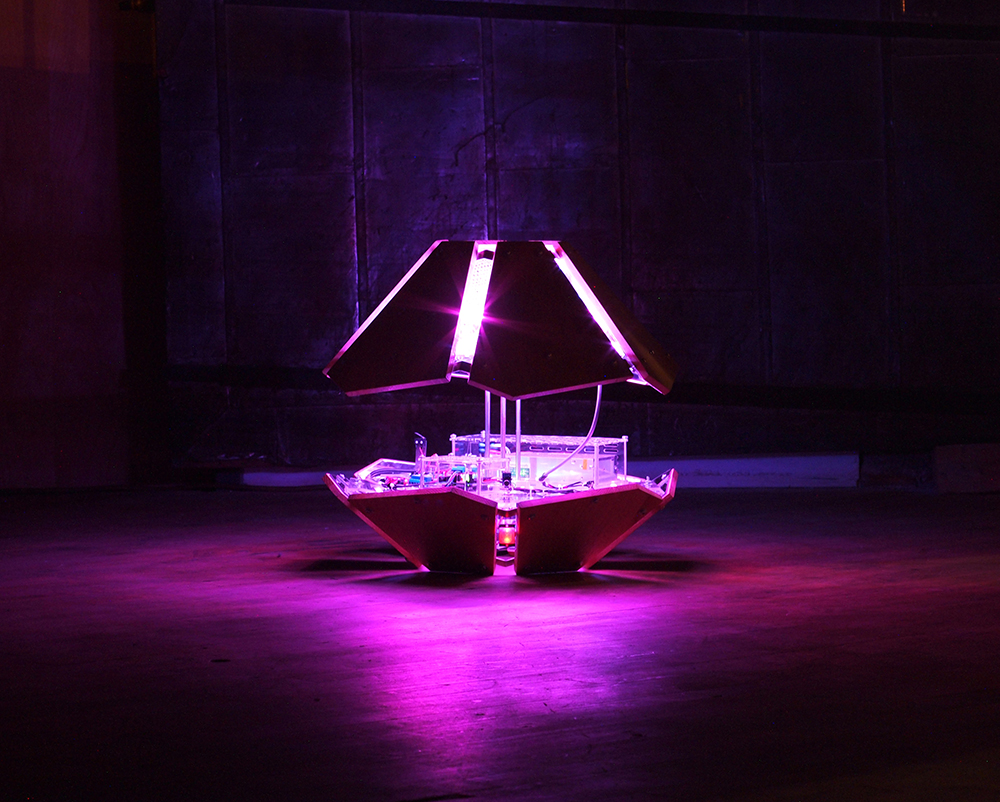
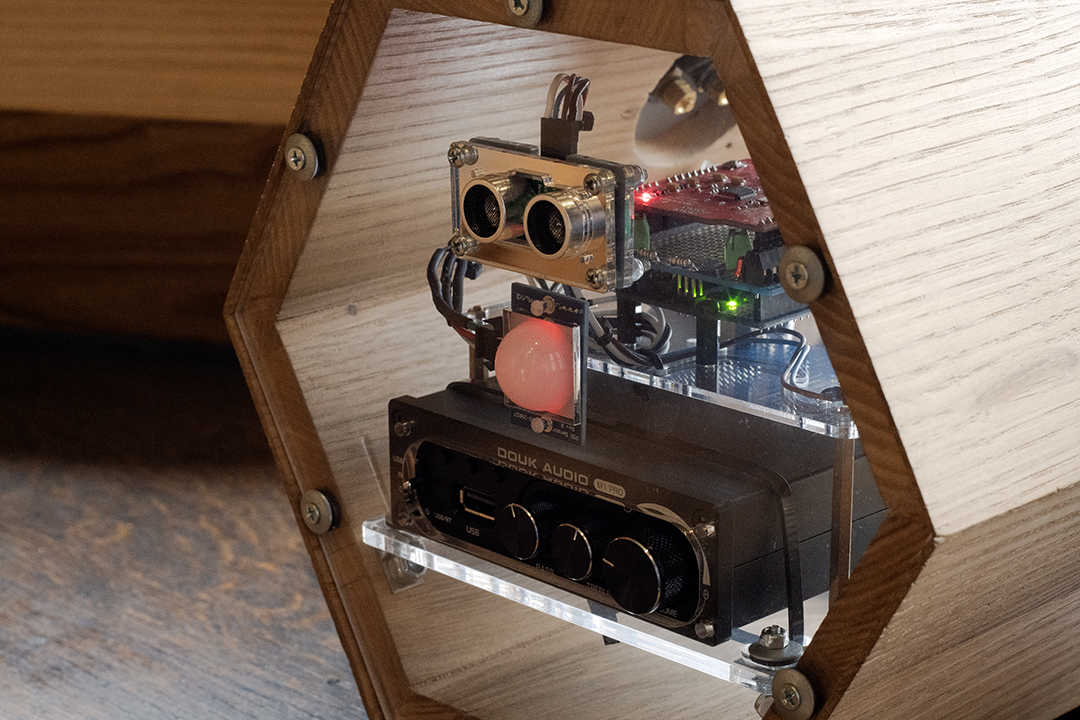
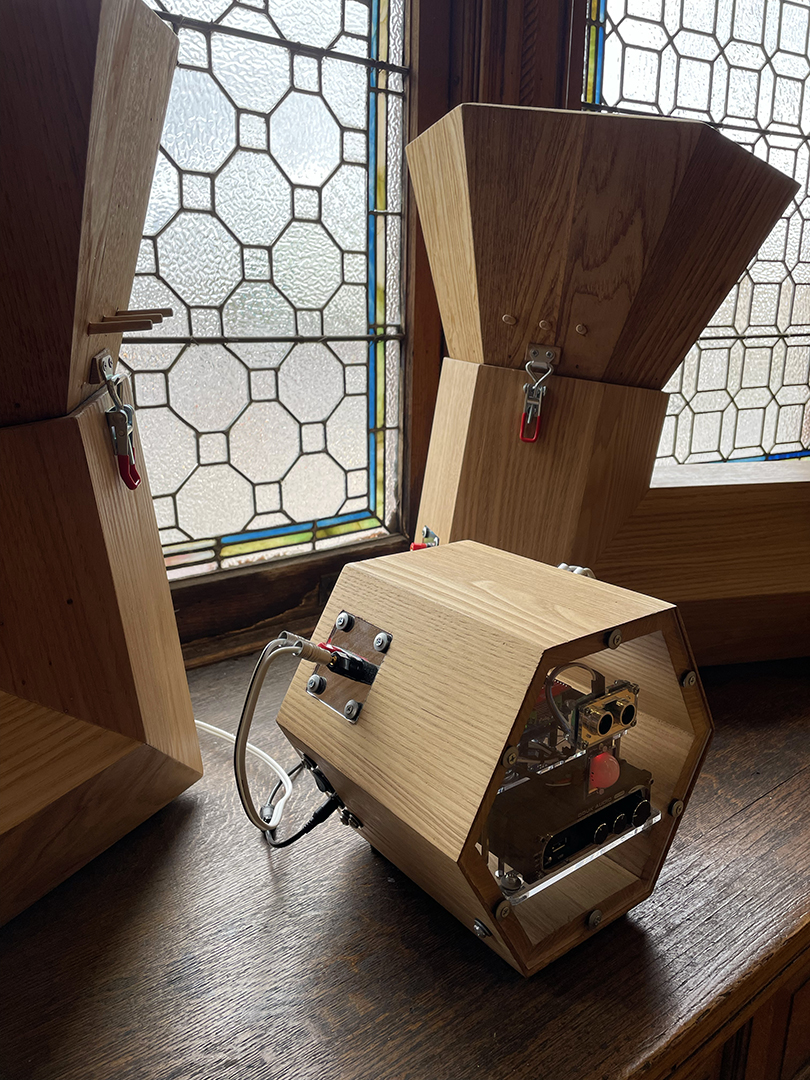
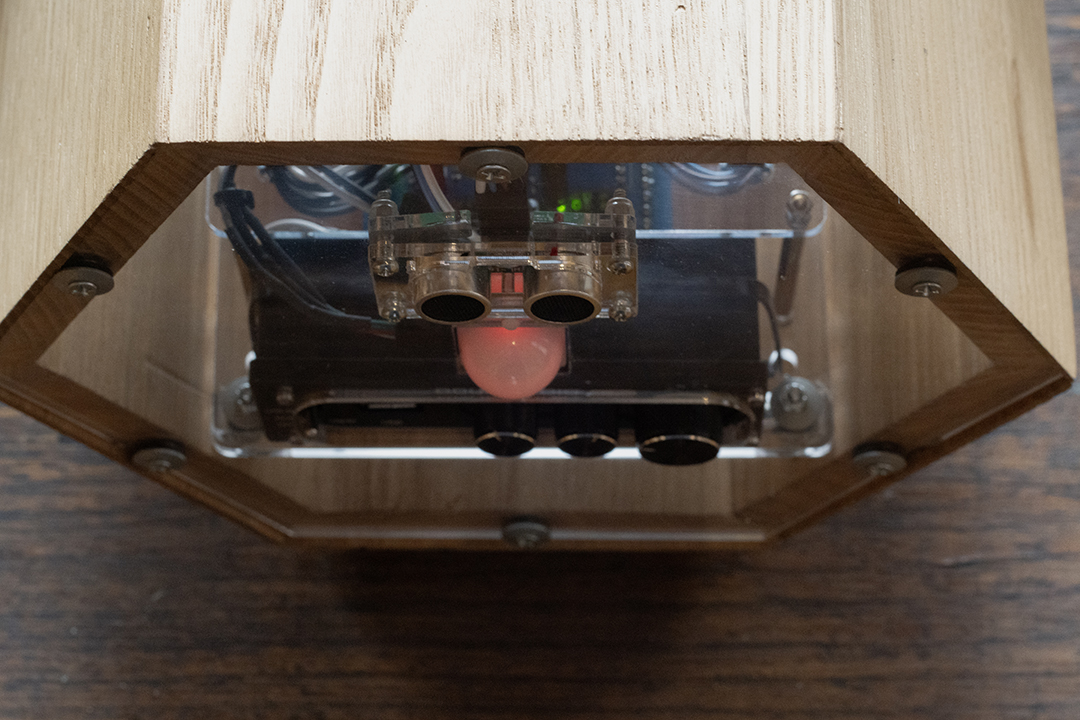
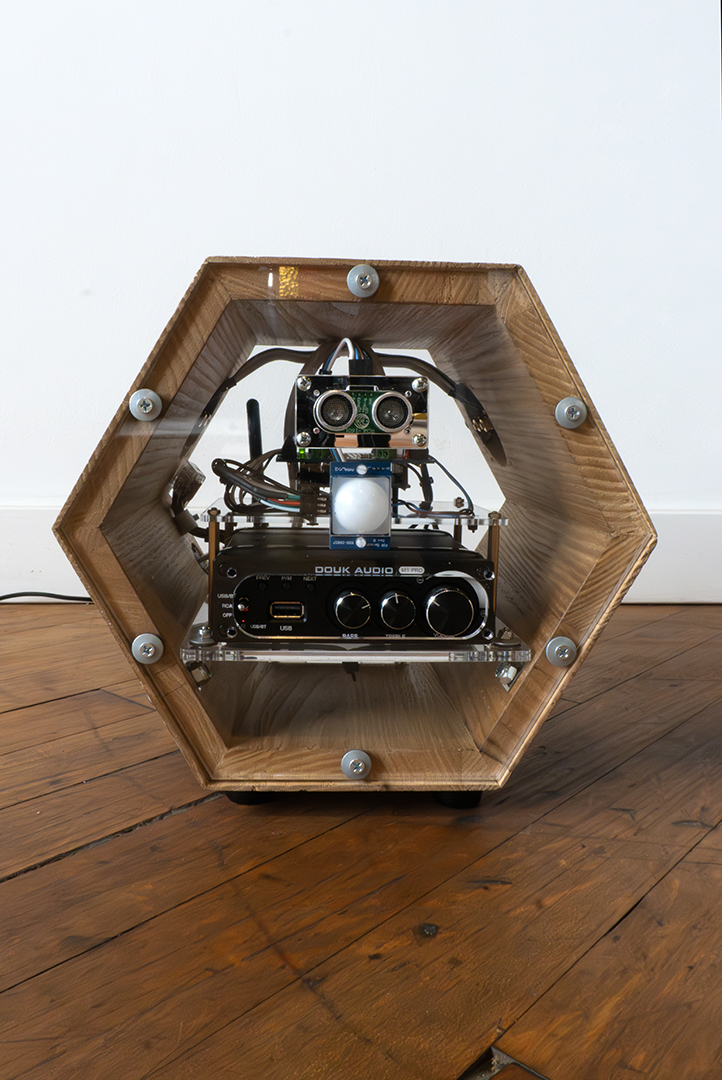
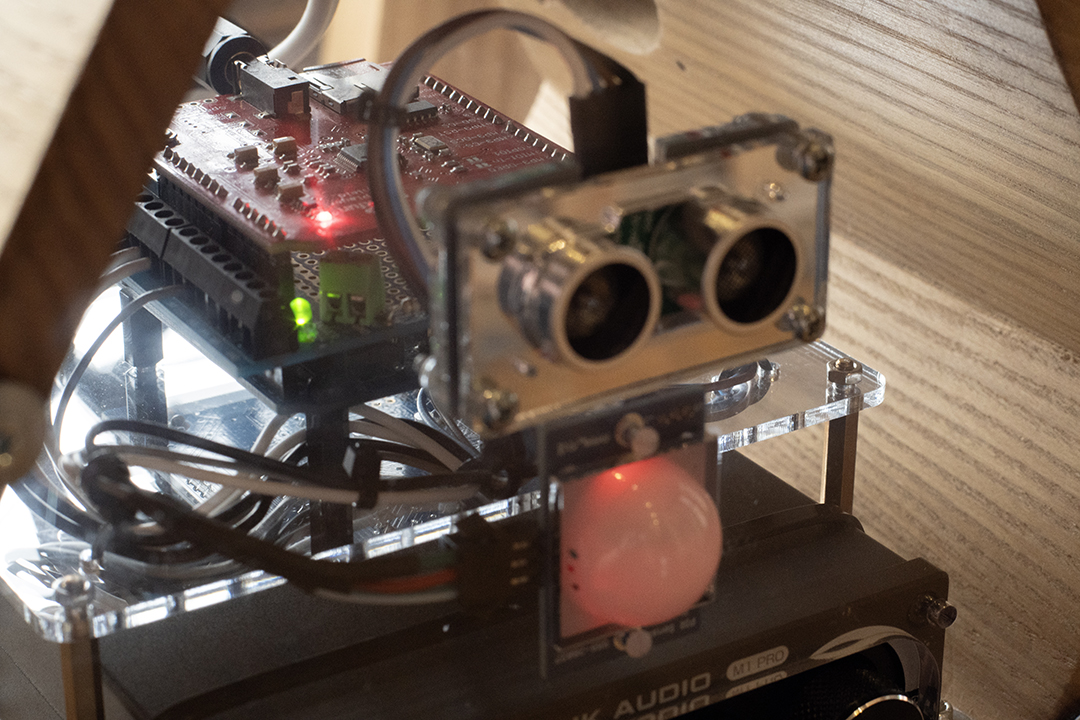
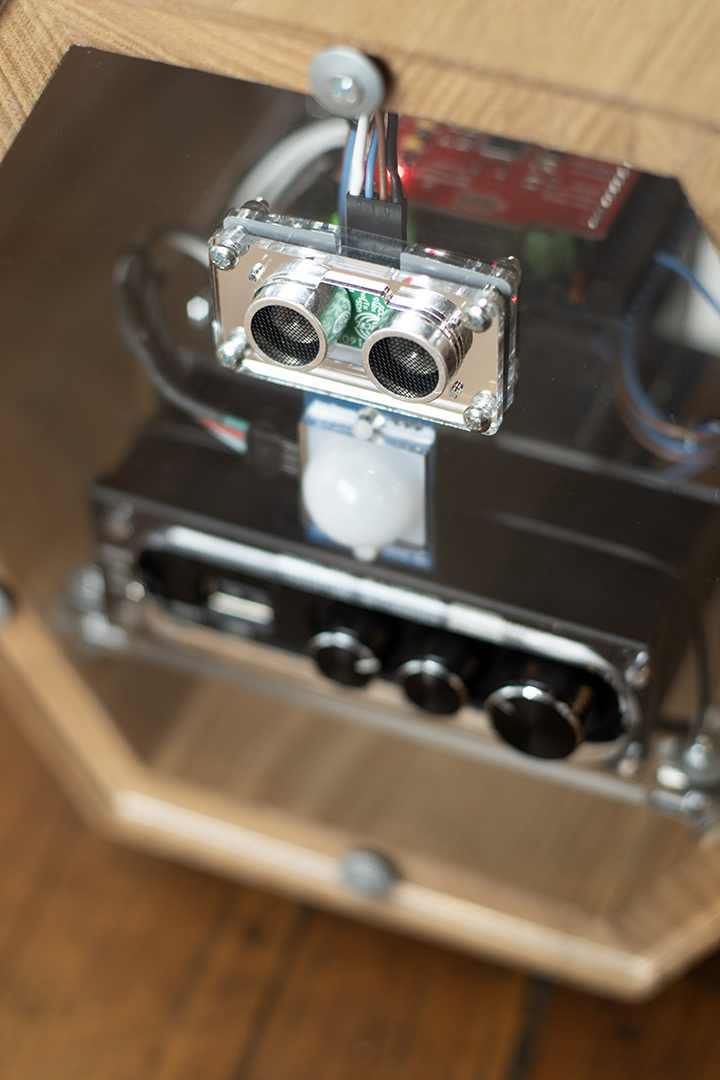
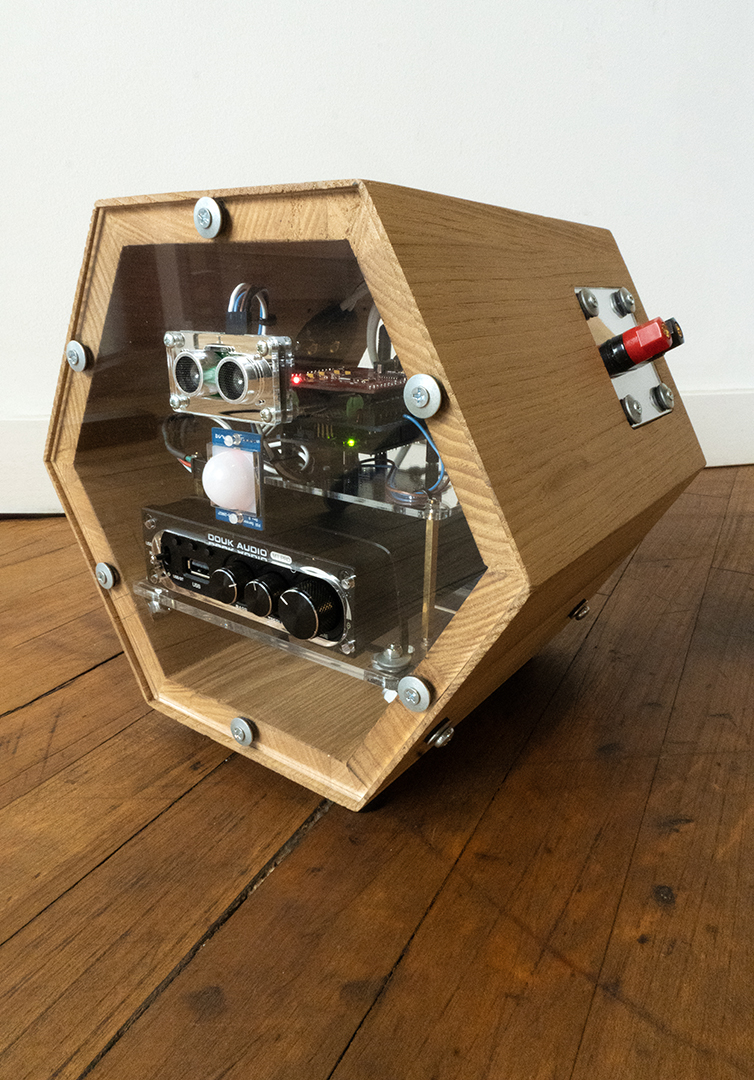
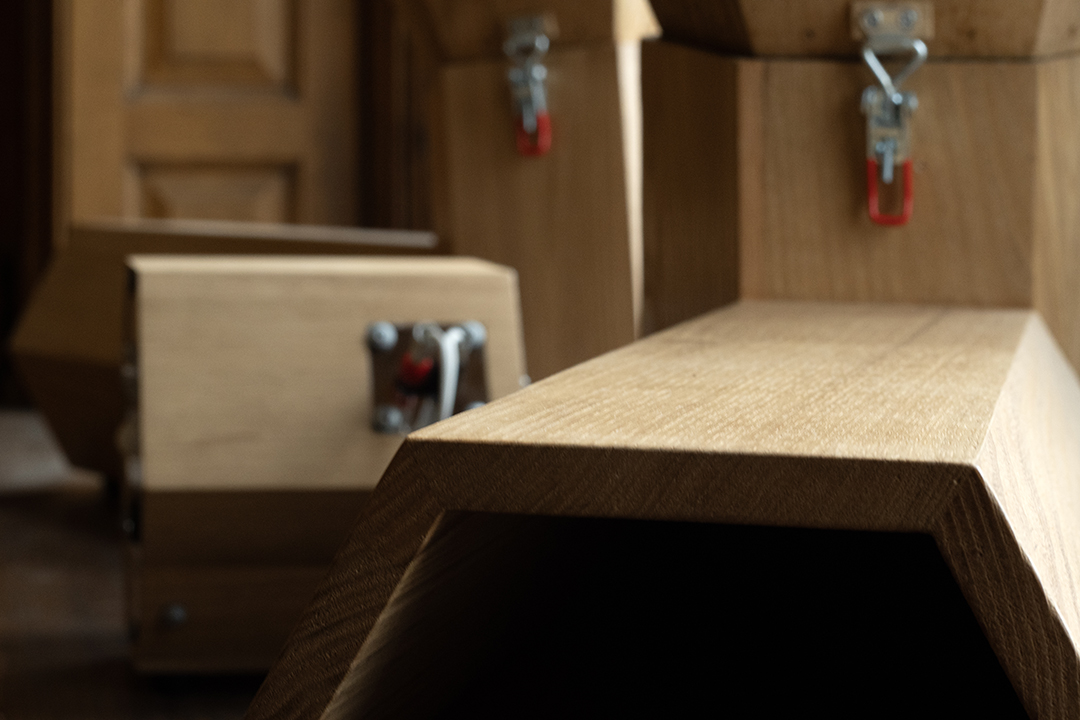
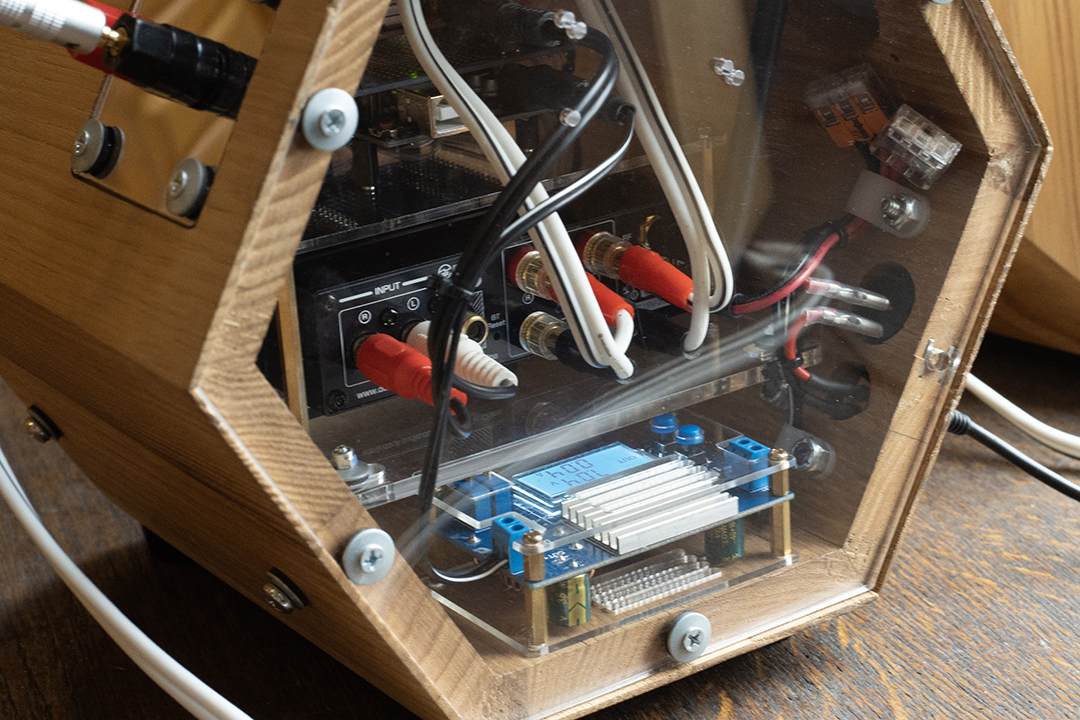
“The Shy Machine” is a motion-activated, sound-reactive, environmentally adaptive, kinetic light sculpture. As its name would suggest, this robot is shy. The two halves of this 12-sided geometric form open and close depending on the noise levels in the environment. Vibrant lights pulse from within according to the volume in the room. The insides are packed with electronic brains, lights, and sensors to make this happen. In this article, you can explore the build process from start to finish. For more about the artistic concept, click here. Or if you’re interested in how I built it from start to finish, click here.
I was very pleased to see the high caliber of other represented contemporary artists, photographers, performers, & designers. You can find copies of the magazine online, at their gallery in Barcelona, or at one of the ArtsLibris International Art Book Fairs: ARCOlisboa (Lisbon), MACBA (Barcelona), FIL Guadalajara (Mexico).
“The Circadian Machine” by Daric Gill, A Light & Sound Sculpture Featured in Divide Magazine: Issue 13
I am incredibly grateful to be featured in Issue 13 of Divide Magazine! Having “The Circadian Machine” highlighted among such talented creatives is an honor. It’s always wonderful to share my work with a wider audience, especially through an international publication like Divide Magazine. I’m excited to continue exploring the intersection of light, sound, and emotion, and I can’t wait to start on the next piece.
“The Circadian Machine” at the Columbus Museum of Art
“The Circadian Machine” is a motion-sensitive light & sound sculpture that uses its GPS location to dynamically change its internal clock & sound + light displays based on the unique amount of sunlight on that specific day & location. It can be activated from anywhere in the world by special invitation. You can read the whole magazine here (my feature is on pages 216-217).
Daric Gill’s ‘Absolute: Passage’ – A Colorful Reflection of Seasonsby Daric Gill
I started writing this near a railroad track in a woods with leaves painted in reds, greens, & golds. My laptop teetered precariously on a fallen Osage Orange tree; a makeshift standing desk that has been inching into soil for the last 20 years. Once part of my routine of hidden trails, the thick woods & itchy bramble that made it invisible from only a few feet away is now a distant memory. A few days ago I was unseasonably wearing shorts after riding my bike into the wilderness. Now, I’m describing this painting from a cafe in New York City in a knit hat & winter coat. That sense of disjointedness is so thoroughly mixed into this piece, that it felt fitting to start there.
I have focused on opportunities for my sculptural robotics series for the past few years. But when the new year ended, I cleared off my workbench & readied it for a new painting. I set out to build on the themes & geometry of an earlier painting, “Absolute: Allegory” (read about it here). As a person who plans every step of the piece, I laid out my composition in a few sketches & mocked up the colors on the computer. But I wasn’t ready yet. My colors weren’t where my heart was.
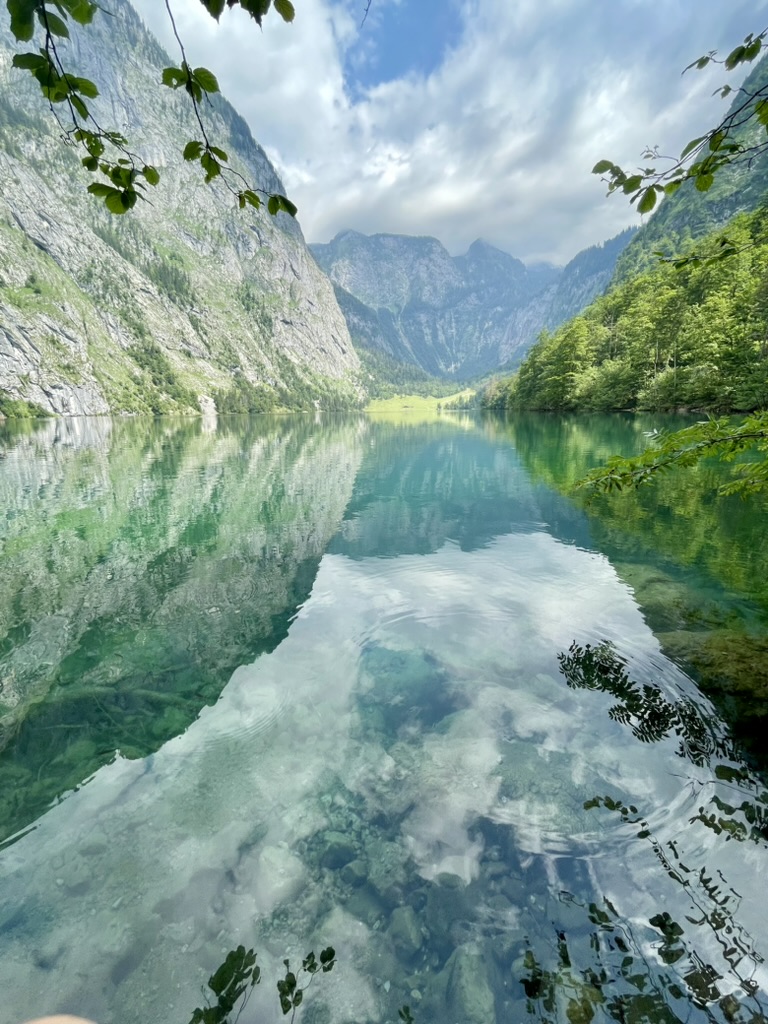
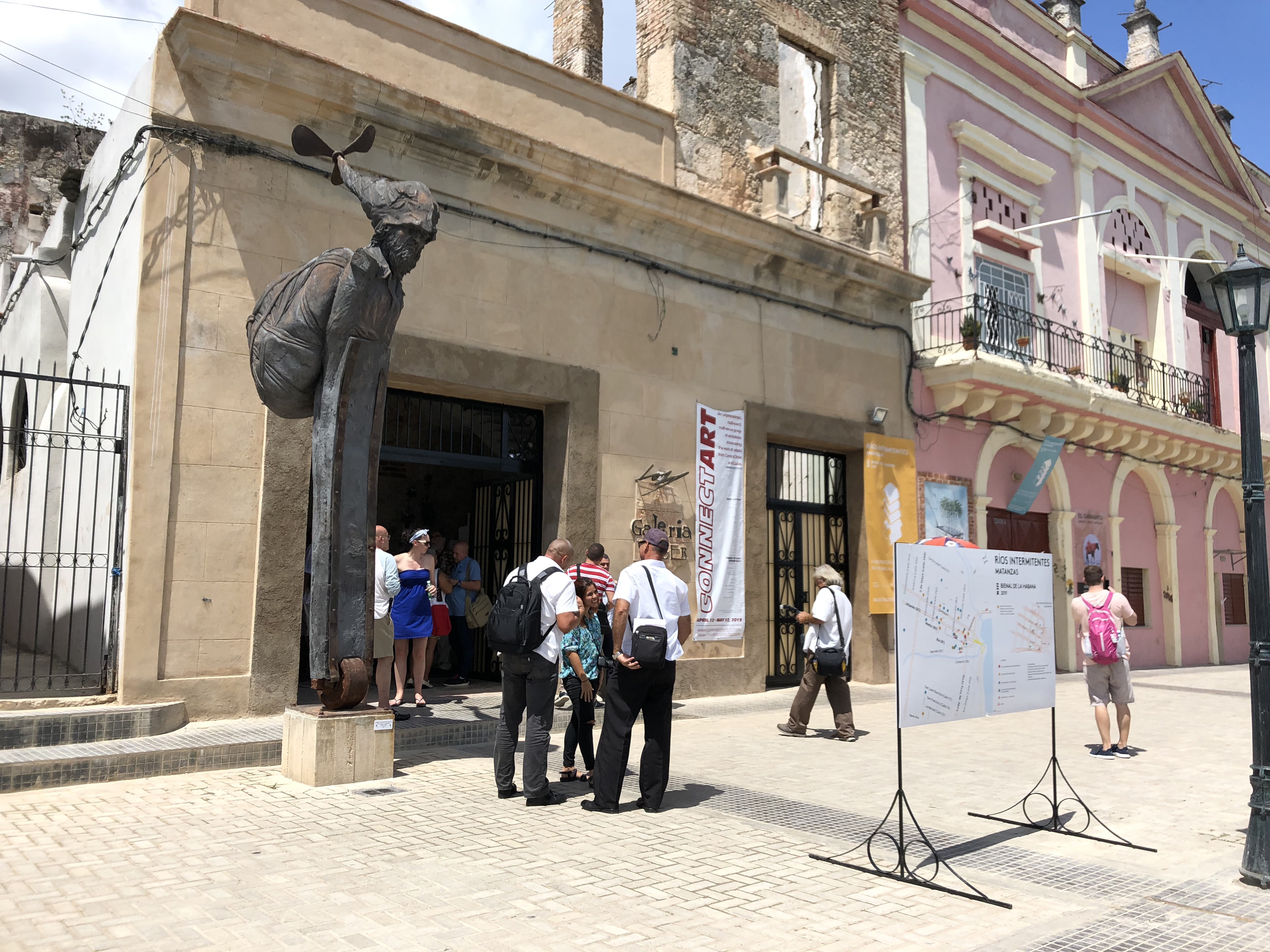
As is my custom, I went on a hike to gather my thoughts & to choose natural subject matter for reference as I paint. While wandering in the woods, I look for items that develop the conceptual focus & drive the philosophy of the work. My world was frosted with milky grey & brown. Though pretty in its own right, at that moment, I wanted nothing more than to escape this aesthetic. I poured over my travel photos, knowing I’d be abroad in a few months collecting sounds & experiences for my other artwork. In seconds, I became wistful for the hues of Italy’s Cinque Terre, the painted architecture in Cuba, the chromatic ceramic tiles of Andalusia, the lush greens of the Alpine mountains, & the tangerine sunsets on California’s coast.
The first brushstrokes were applied during a January ice storm with -3° F (-19° C) winds. After transferring the composition onto the painting surface, I mixed up the aspiring summertime color scheme & plotted out the base coats. By the end of the first few sessions, my color choices were so brazen against the winter around me, that I needed to get used to them. I don’t remember making the direct choice to leave it unfinished, but I do remember being frustrated by the lack of colorful biological life I could use as subject matter.
I was forcing it. One morning, I woke up & realized I had literally painted a window, a portal, that described my desire to skip through this moment & pop out somewhere at a different time. The painting sat elusive, untouched for months, missing the symbolic representation of life, thus the main focus point.
This is such an opposing notion for me. I’m a person who can’t put work down until it’s finished. Stepping away from a piece for any length feels like texting a friend something significant, only to be left on read. When too much time passes for me, that specific narrative either loses its potency or expands into something so complex it feels impossible to work backward to the beginning.
In the nearly 25 years I’ve created work professionally, I’ve never had a long passage of time where a piece rested unfinished. During its time on my desk, I got used to, even fell in love with, the colors. Maybe their stark contrast melted with the snow, now matching the seasonal colors around me. Maybe by putting it aside for a while, I could concentrate on other work, giving me the distance I needed. Or perhaps it was because, in that break, I spent another few months in Europe, erasing the disappointed stillness I felt during the initial winter stages. Likely a mixture of all three, I could return to the piece.
This piece was slated for inclusion in the 15th Bienal de La Habana (Havana Biennial). In March, I was invited to propose a new interactive electronics sculpture for this exhibition, which I gladly accepted, having partnered with an international artist exchange through the 13th Havana Biennial & other fantastic exhibitions. However, after a few hurdles & multiple requests to revise the proposal, a final concept emerged that transformed the piece from a 15-foot electronics sculpture to a small oil painting that could fit in luggage. I leaned into being a versatile artist & while I was disappointed by the drastic change, it did reignite my enthusiasm for my half-finished painting.
The seasons had changed, the biological subject matter matched the vibrancy of the work, & I had a new philosophical motivator for the end look of the painting. I spent almost 2 months traveling abroad, listening to the world, & gaining inspiration that fueled the new idea of the work. The final brushstrokes were made in a September drought on a hot 91° F (32° C) day. I built a frame from reclaimed walnut wood, formerly antique furniture. The final photos were taken of the work & it was dropped off for a preview exhibition here in the US.
A couple days before the exhibition, last-minute changes arose to the exhibition arrangements, & considering the political climate here, I made the thoughtful decision to pause my inclusion in the exhibition until there is a more focused direction for my work & the world around us. My strong connection with the people of Cuba is important, & I am excited about the opportunity to re-establish that artistic relationship soon.
This piece is one of my new favorites. There was a real feeling of release when I returned to the painting. If you’ve ever created something from nothing, you might know that internal battle of ideas while you test out directions for your creation. There’s no handbook. All failures are yours & all successes are yours. A missed target can feel defeating. But working through an idea until it works well has so much validation. And this piece works now. I’m pleased with it.
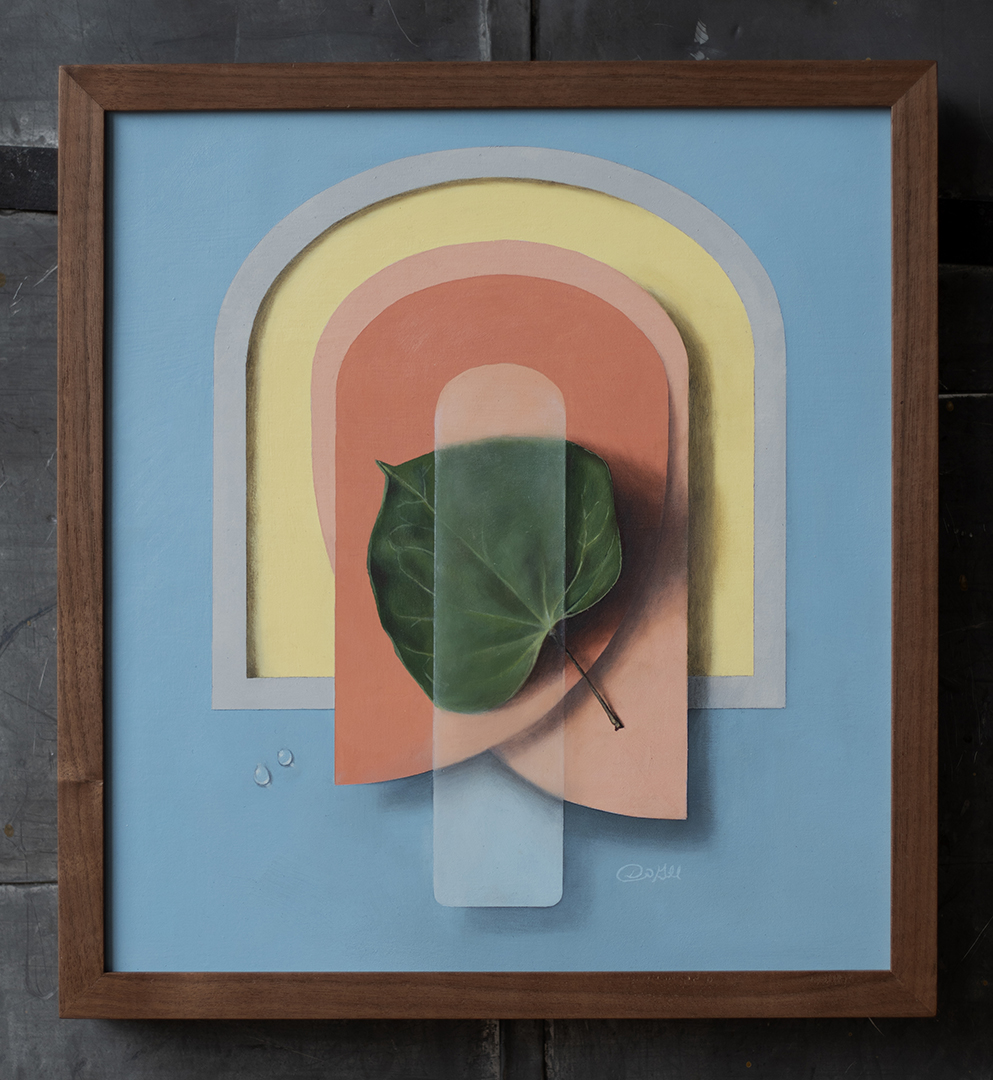
A Visual Description (for the visually impaired or curious soul)
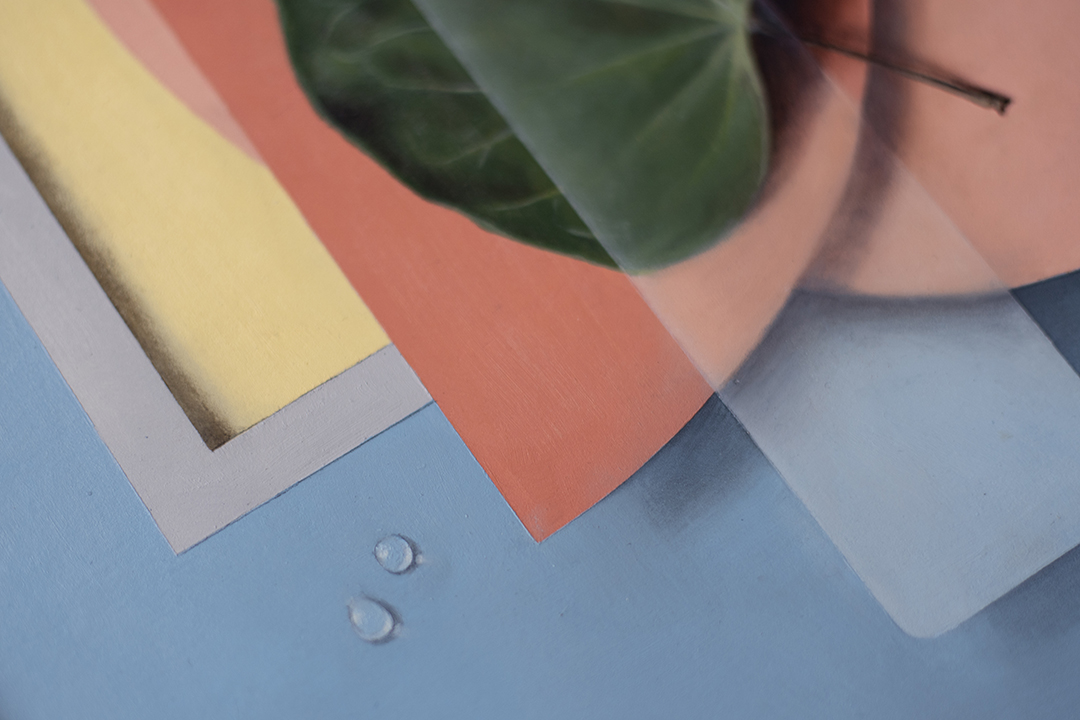
An oil painting in a vertical rectangular format. A series of arched geometry grow concentrically from the center of the composition, creating a perspective similar to that of looking down a hallway or through a passageway. At the forefront is a vertical translucent white element, long & flat on the sides, with rounded bottom corners & an arched top. A single forest-green leaf transitions in focus beneath the frosted shape. Below the leaf are a pair of pastel pink-orange shapes. Similar in appearance to cut paper, they are stacked in a way that resembles a stylized upside-down tulip. The light source is above & to the left, which casts fairly stark shadows down & to the right.
The top teardrop shape on the left, a shade darker in value than the one on the right, is also slightly shorter. This creates a directional focus that angles up & to the left, matching the diagonal placement of the leaf. Below these layers is a sky-blue plane with an arched portal cut out in the center, outlined in a neutral blue-grey, exposing a soft yellow background in the furthest plane. Looking to the bottom left of the portal, you can see two small drops of water about to drip down from the light blue background. The artist’s signature is opposite to the small drips on the bottom right, located slightly lower in the negative space created by the central elements in the painting. The piece is held in a simple light brown walnut frame.
Interactive Sound Sculpture: Robot Co-Created by Bees, Imitates A Plant Mimicking Other Organisms, Tricks You Into Caring
by Daric Gill
[Top Video] “The Translation Machine” & [Bottom Video] The Making Of “The Translation Machine” Interactive Sound Sculpture & Co-Creation With Bees by Daric Gill
What It Is & How It Works
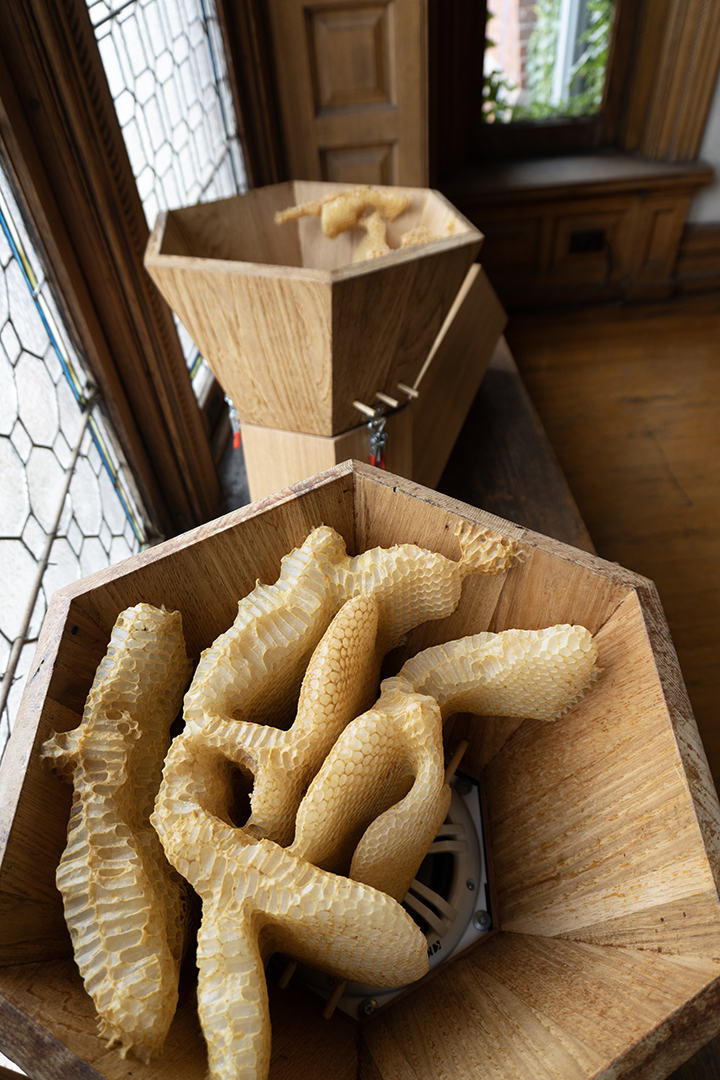
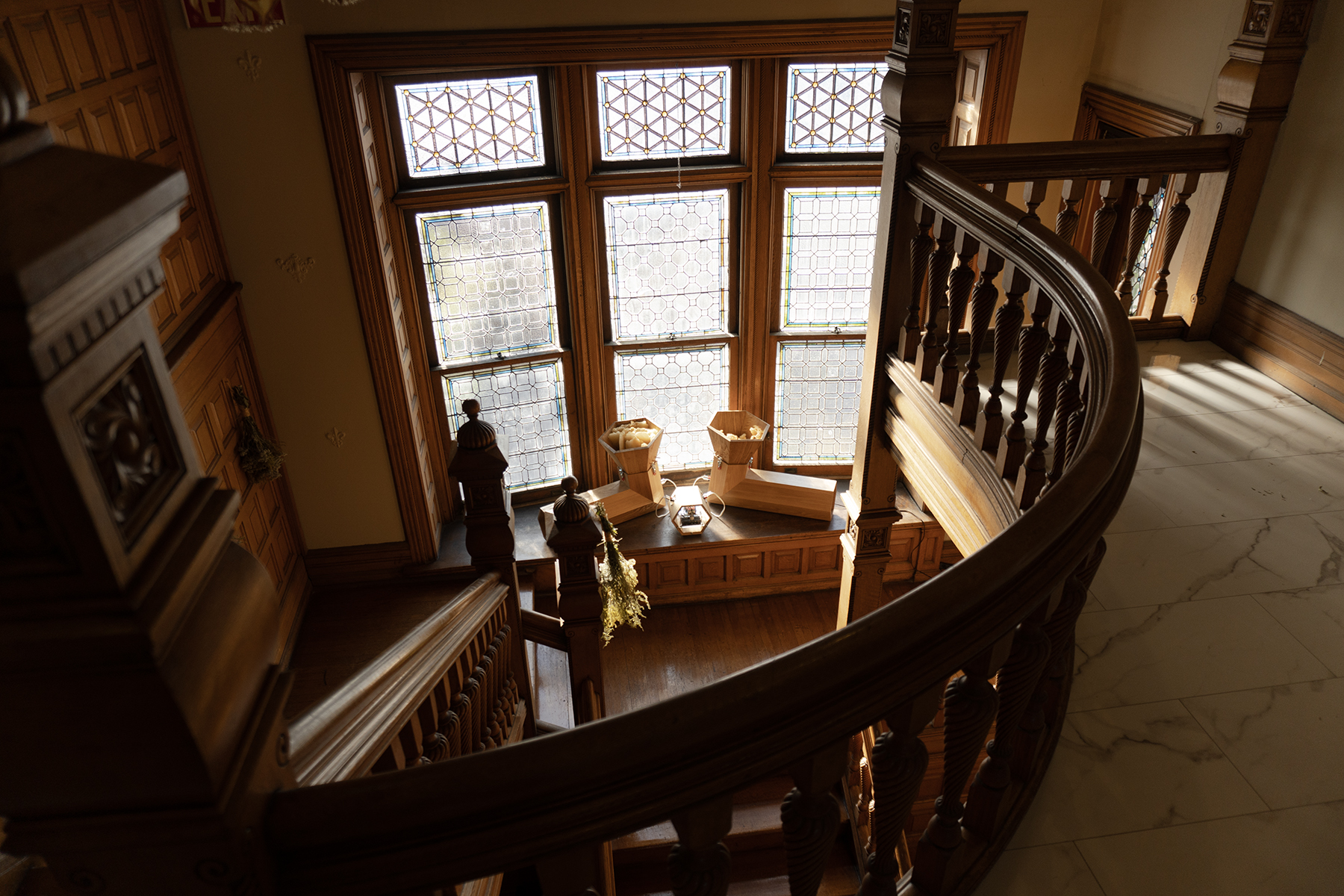
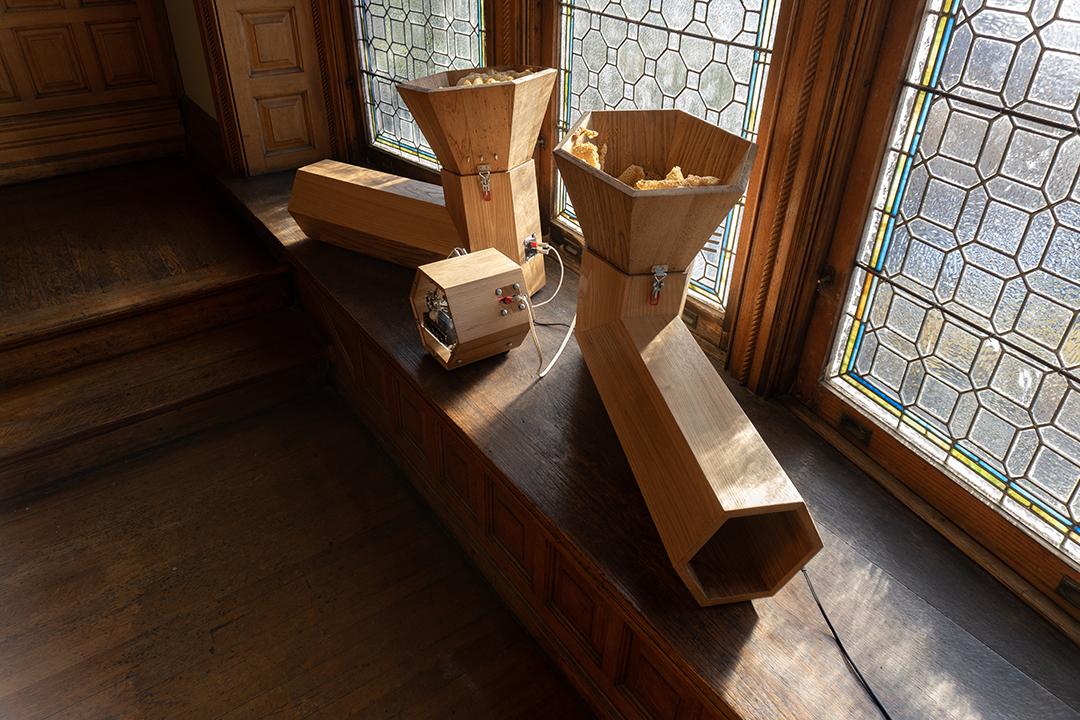
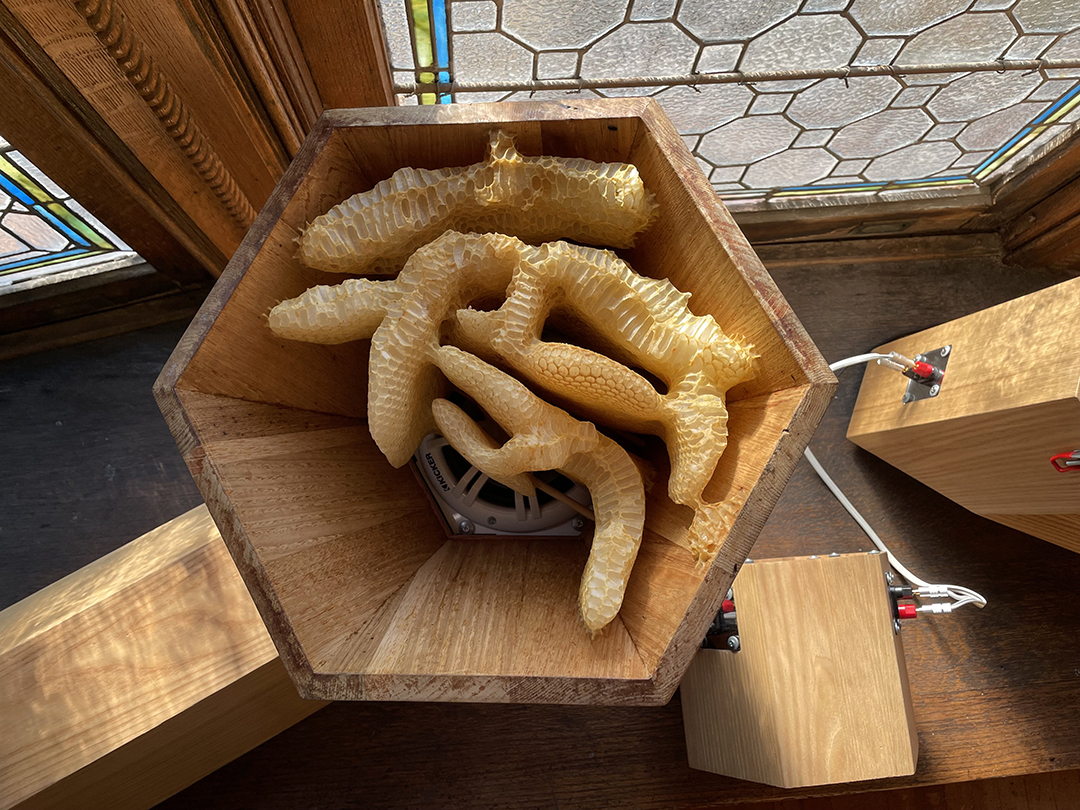
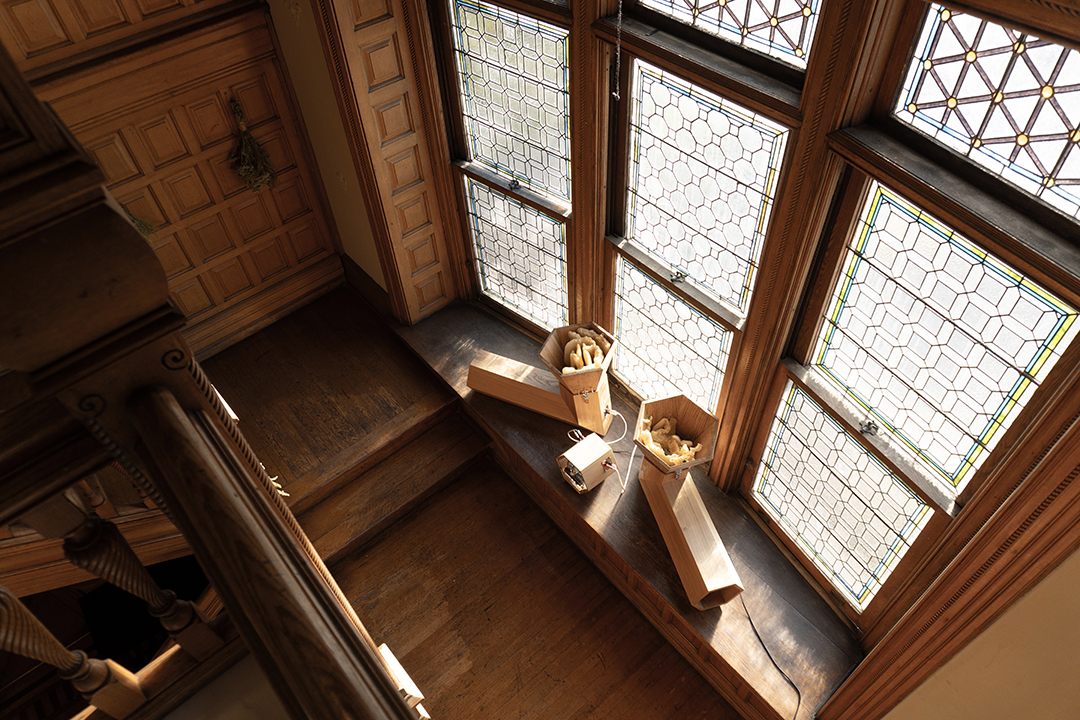
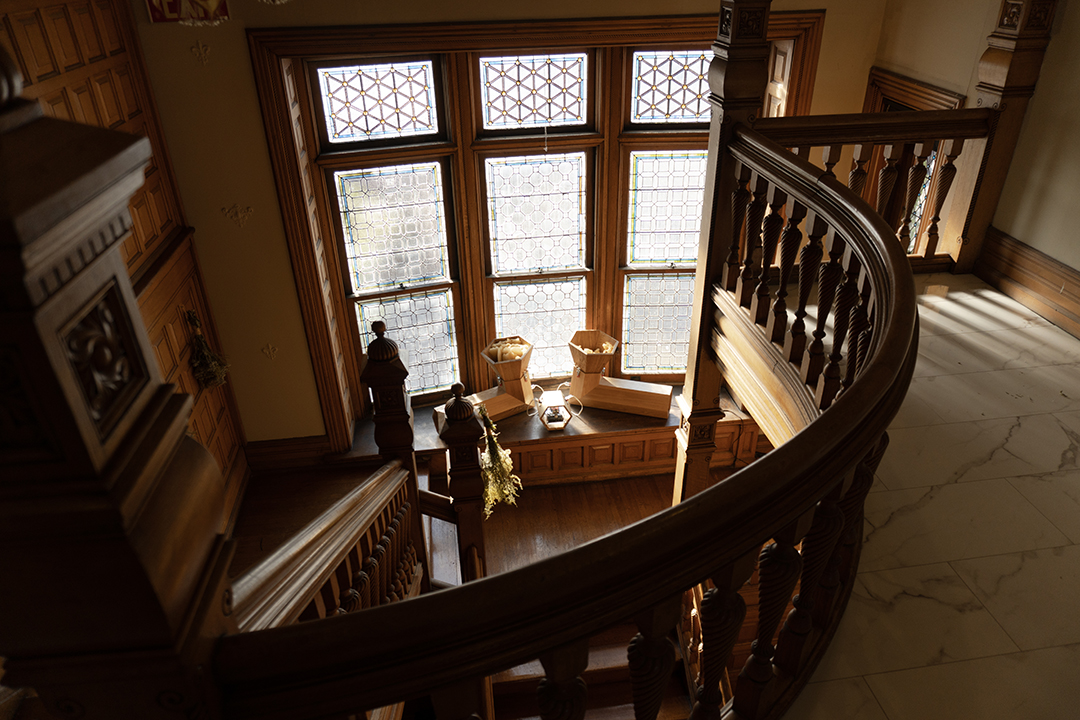
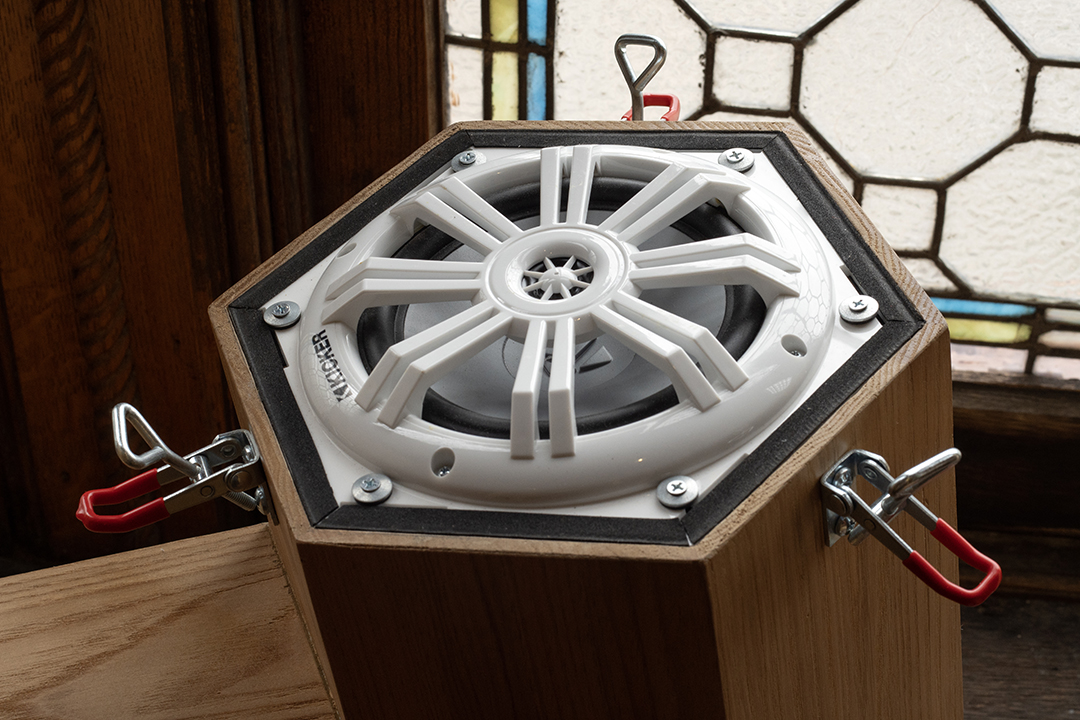
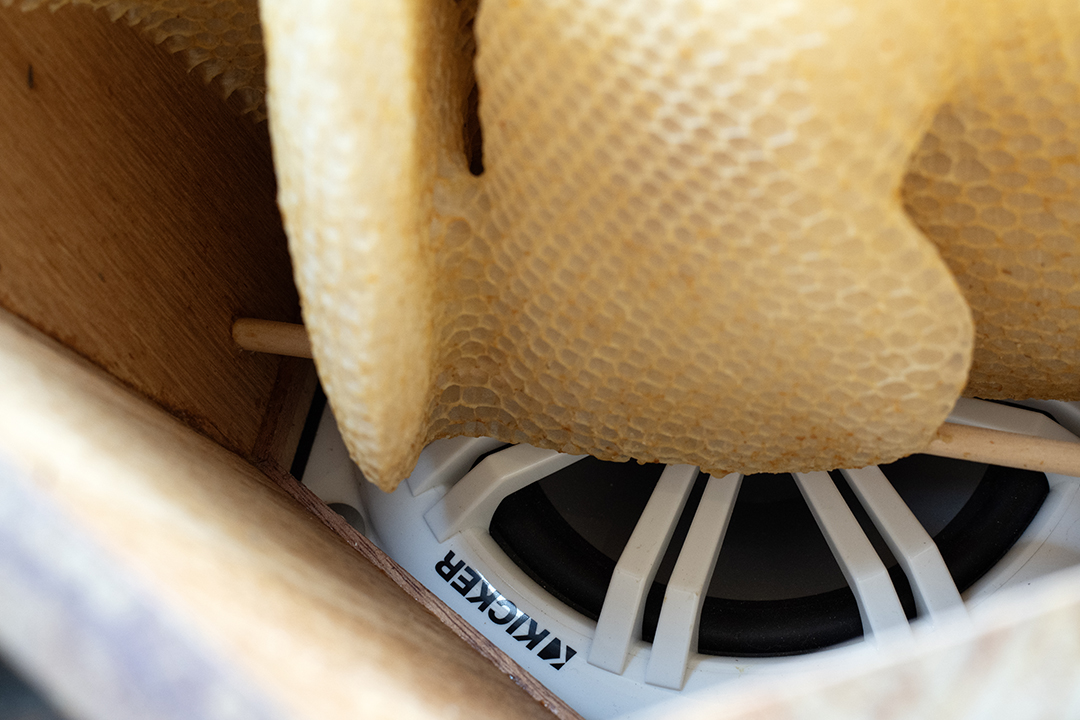
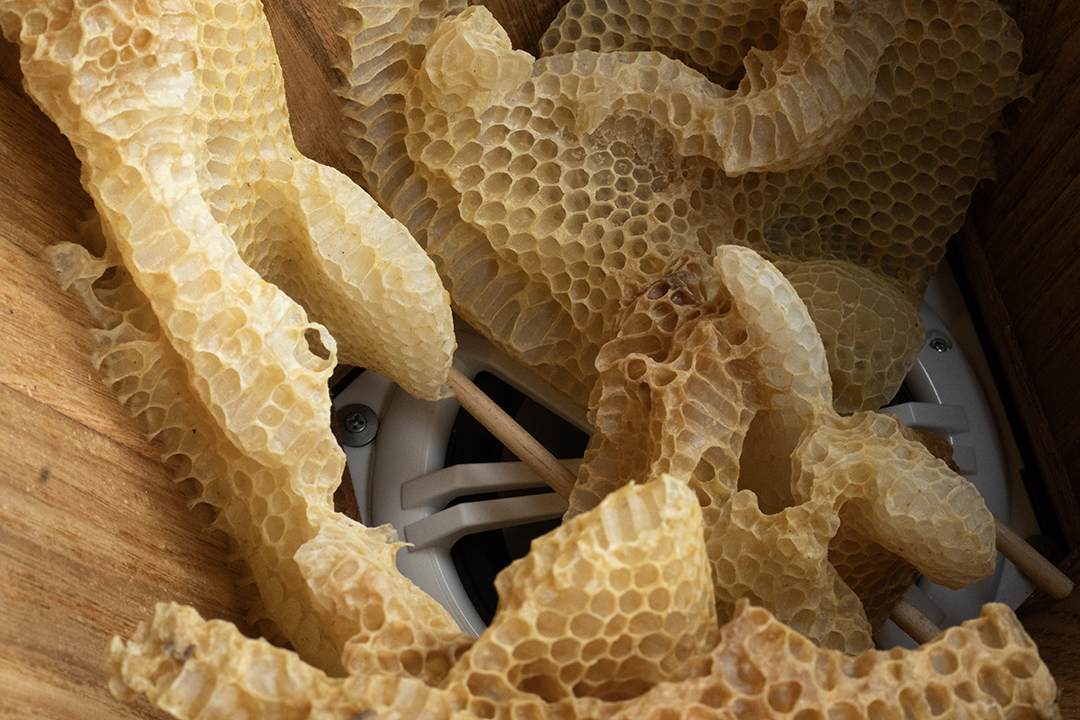
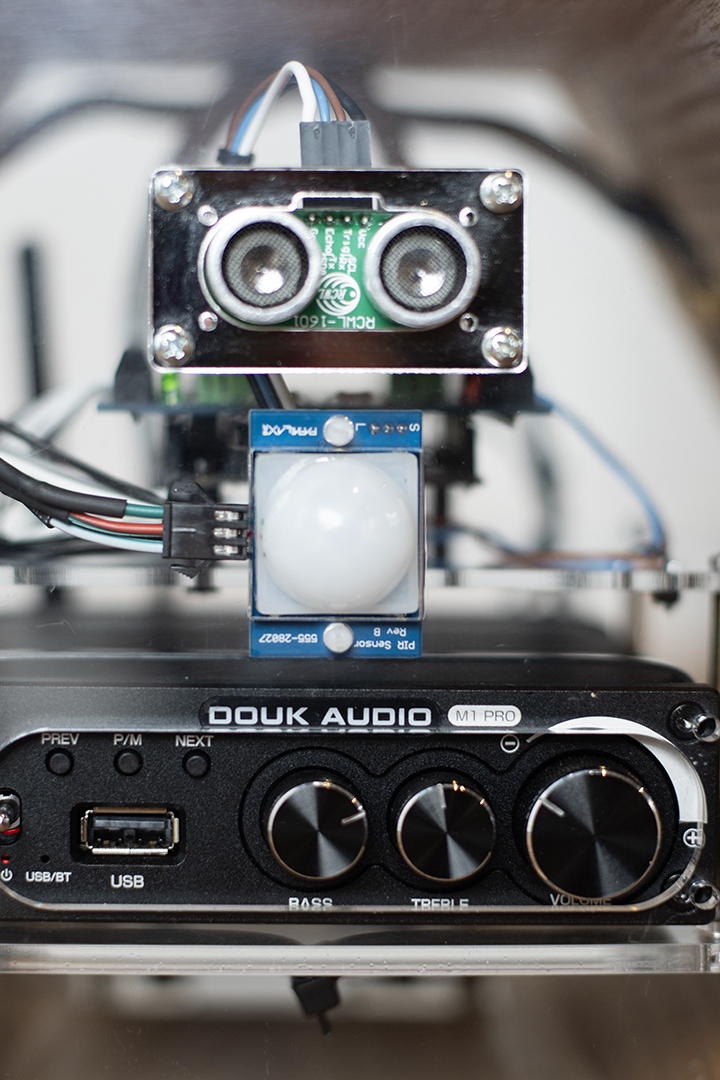
“The Translation Machine” is a sound installation & interspecies co-creation with honeybees. A set of wooden hexagonal tubes act as acoustic chambers for speakers that play recordings through honeycomb that cling to the inside of amplifying horns. When triggered by motion, the sculpture plays recordings taken from the artist’s global travels, with the volume increasing as the viewer gets closer to the honeycomb. This is achieved using an artist-programmed microcontroller, a passive infrared sensor, & sonar sensors housed in a hexagonal box at the sculpture’s center.
This piece discusses the oscillation between purpose & compromise, precision & chance, in which different ecosystems are presented with an opportunity to blend through adaptive problem-solving. It’s a study of the convergence of technology, nature, & humanity.
At first, collecting sounds wasn’t my main goal. As an artist, I often go on personal adventures to spark ideas or sit quietly while I think & create. For years, I’ve used photos & videos to document my process. Over time, I found that I could connect more deeply to sights, sounds, & smells by remembering them through an active archive. Soon, I started carrying a small field recorder as a daily habit, ready to record enriching or special moments.
Recently, I’ve been reflecting on memory & time as ways to explore apathy, empathy, displacement, & adaptation. These ideas are extremely challenging, & it’s quite tough to find a clear answer within such complexity. In a larger sense, they are abstract self-portraits using technology.
Intentional listening required me to invest time & patience, grounding the experience in new ways. Normal moments came under close auditory examination, & significant memories became even richer. As I engaged with the world, my perspectives expanded, & my connections to global topics deepened. This piece, & others in this series of robotic installations, are dynamic. Unlike a static image, they can examine what recalibration feels, sounds, & looks like in real time.
Inspired by Nature: Mimicry, Biomimicry, & Polybiommicry
Clearly, the aesthetic designs are inspired by nature; The two speaker boxes resemble a flower, with the resonance chambers acting as a ‘stem’ & the amplification cones, the ‘blossom’. But why does the ‘blossom’ hold a network of honeycombs?And what of the control center that sits between the two, storing the sounds & computing the sensor data?
First, let’s talk about some cool tactics used in nature. Nature has derived all sorts of inventive ways to have other ecosystems aid its success. i.g. The harmless milk snake mimics the markings of the venomous coral snake to avoid predators, the alligator snapping turtle uses a pink, worm-like appendage on its tongue to lure prey, & some flowers trick insects into pollinating them through physical or scent mimicry.
This is called Mimicry: the ability of one species to closely resemble (mimic) another species or an object (model) in their surroundings, to gain an advantage.
And while we’re at it: Biomimicry is a practice we use, that learns from & mimics the strategies used by living organisms to solve complex human or societal challenges; We look to plants, animals, & ecosystems for inspiration to solve complex human problems.
i.g. The structures on a gecko’s feet have led to a textured material that is super sticky without any sticky substances, a Swiss engineer was inspired by the tiny hooks & loops of the burdock plant burs to create Velcro, & scientists have created self-healing concrete using a bacteria bacillus that produces limestone.
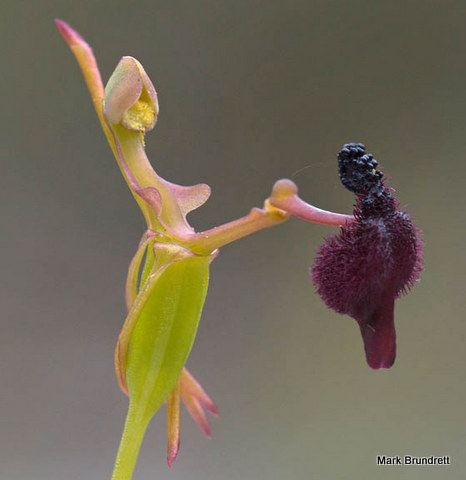
Flowers sometimes do this. The Drakaea Orchids look & smell like female flower wasps. When the flower wasps try to mate with them, they carry the orchid pollen elsewhere.
Likewise, the motive of “The Translation Machine” was inspired by the behaviors of mimic flowers—essentially, it’s a robot pretending to be a plant known for mimicking other living organisms to get people interested in more globally minded concepts.
By attracting viewers into the piece with noticeable features (like sounds & then further enticing them with honeycomb in the amplification blooms), the piece achieves its real purpose, subtle persuasion. It connects participants to places & experiences they often dream of but might not truly connect with otherwise. Viewers are presented with their own personal glimpse into interesting moments, environments, & unique experiences from around the world. Rather than being confrontational, it gently uses viewers as hosts, who carry off new notions of global & ecological curiosity like seeds or pollen.
The goals, appearance, & physical actions of “The Translation Machine” double down on nature-based mimicry, an aim to secure the future of both the mimic & the model. I’m calling this polybiomimicry, as it layers multiple uses of such nature-based imitation & inspiration.
Combining Intent With Chance
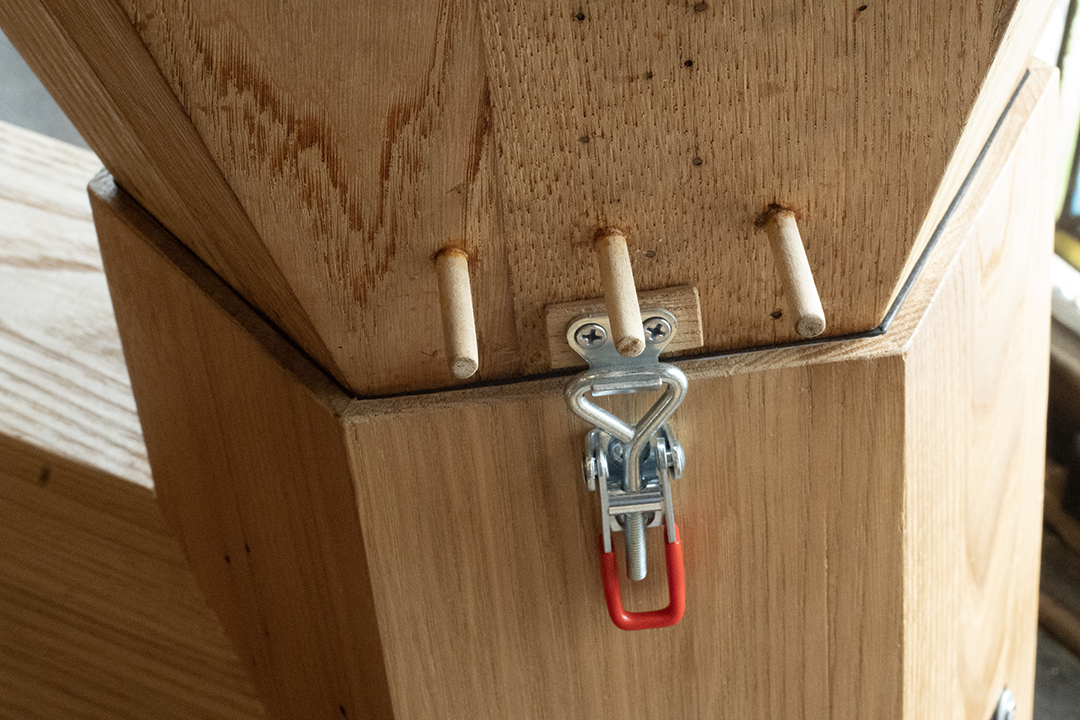
This sculpture’s design combines constraints & chance. Using 3-D software & trigonometry, I drove the design from artist-set parameters & real-life measurements. Among a few applicable variables: are the size of the beehive boxes, sound resonance, variations in wood thickness, & the space needed for the bees to move. Even the most complex elements of the piece could be changed dynamically to fit new information. This is called parametric design.
“The Shy Machine”: Fully opened in the Soft Volume Position. Slow undulations of rainbow light.
I intentionally designed my work to blend with the natural behaviors of honeybees. Combining precisely thought-out designs with environmental forces is something I’ve investigated before. In “The Shy Machine”, a robot mimics wilderness organisms, reacting to movements & sounds to show viewers how to become part of its ecosystem. In “The Circadian Machine”, a mirrored pod uses its location to run 52 light & sound programs based on the changing sunrise & sunset. The next step involves incorporating more data & collaborations from the environment.
Planning a variable result can only be directed, not controlled. Unlike the other work, including a completely different ecosystem, added the real chance of total failure. The bees might not take to the work at all, rendering an entire year’s worth of designs, building, & travel expenses completely useless. One such example: Weeks of unseasonably high summer temperatures caused the honeycombs to collapse in one of the amplification horns while it remained in the hives.
“The Memory Machine: Sound” at the Center For Science & Industry Museum
In many ways, this follows “The Memory Machine: Sound”, which has been on display at the Center of Science & Industry for the past few years. During its production, timing, scale, placement, & concepts were adjusted due to pandemic limitations. Since then, I’ve formed new partnerships, introduced more complex concepts, added more sounds through travel, & introduced new technical features.
An Eco-Minded Approach
I chose to build the parts included in the hives out of organic material to ensure they wouldn’t harm the bees. The golden brown wood, which comes from an old barn, had one side covered in thick paint & the other darkened by years of weather exposure. To continue this reclaimed theme, the clear & mirrored acrylic was laser cut from leftover pieces of another sculpture. The microcontroller & soundboard have also been used lightly in other projects. Even the templates for creating complex angles were made entirely from scrap materials & mostly reused screws.
A Collaborative Effort For a Good Cause + Exhibition
I’ve been working with Luke Howard, an American beekeeper & viral online advocate from The Bee Collective in Ohio (Instagram link here). The debut of “The Translation Machine” coincided with ‘Beecoming Home’, a collaborative gallery exhibit & educational outreach event focused on bees, nature, & culture. The exhibition’s mission, an ongoing experiment, continues to raise awareness for pollinator habitats in our urban areas. Together with a postdoctoral researcher from the University of Cambridge, Sarah Scott, they are raising recognition & funding for additional pollinator habitats in the region.
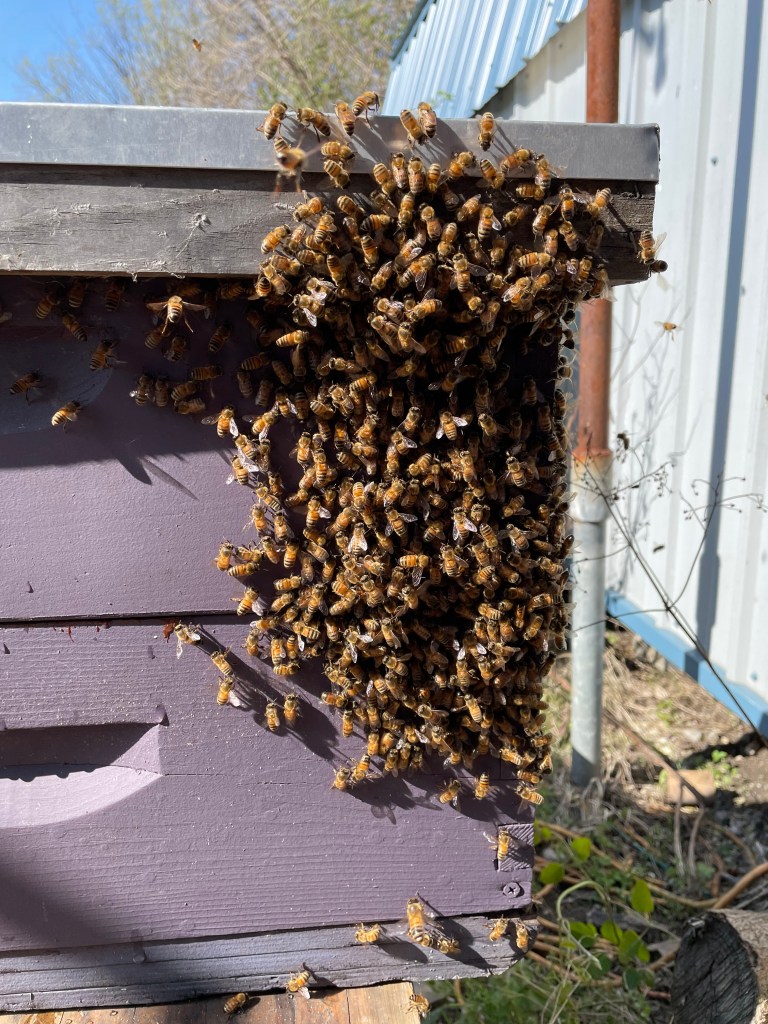
Luke & Sarah have been integral parts of this project. In the spring, I stood with Luke in a swarm of bees as he shifted them to a new hive. Shortly after, he placed part of my piece (the amplification horns) into the new hives & added some starter wax called foundation, where they remained throughout the summer. While I’ve been off collecting my sounds across the world to bring back to this piece, he looked after the actions of his bees, making many nuanced adjustments to the work so it has the best chance for success.
After serving as a vessel from which the colony could build their combs, the amplification horns were pulled out & joined with the acoustic boxes. Luke & Sarah were a wealth of information, candidly guiding me & answering my rudimentary questions with no judgment. They even helped me get nerdy with more abstract aspects like building in ‘bee space’ (the ideal gaps in a hive that bees need to move, regulate temperature, & protect from outside forces). It was amazing to listen as they discussed cutting-edge pollinator research.
I implore you to check out The Bee Collective or connect with your pollinator-friendly community. From my experience, you won’t be disappointed.













 Daric Gill
You must be logged in to post a comment.